Do things like these appropriate?
Product barcodes:
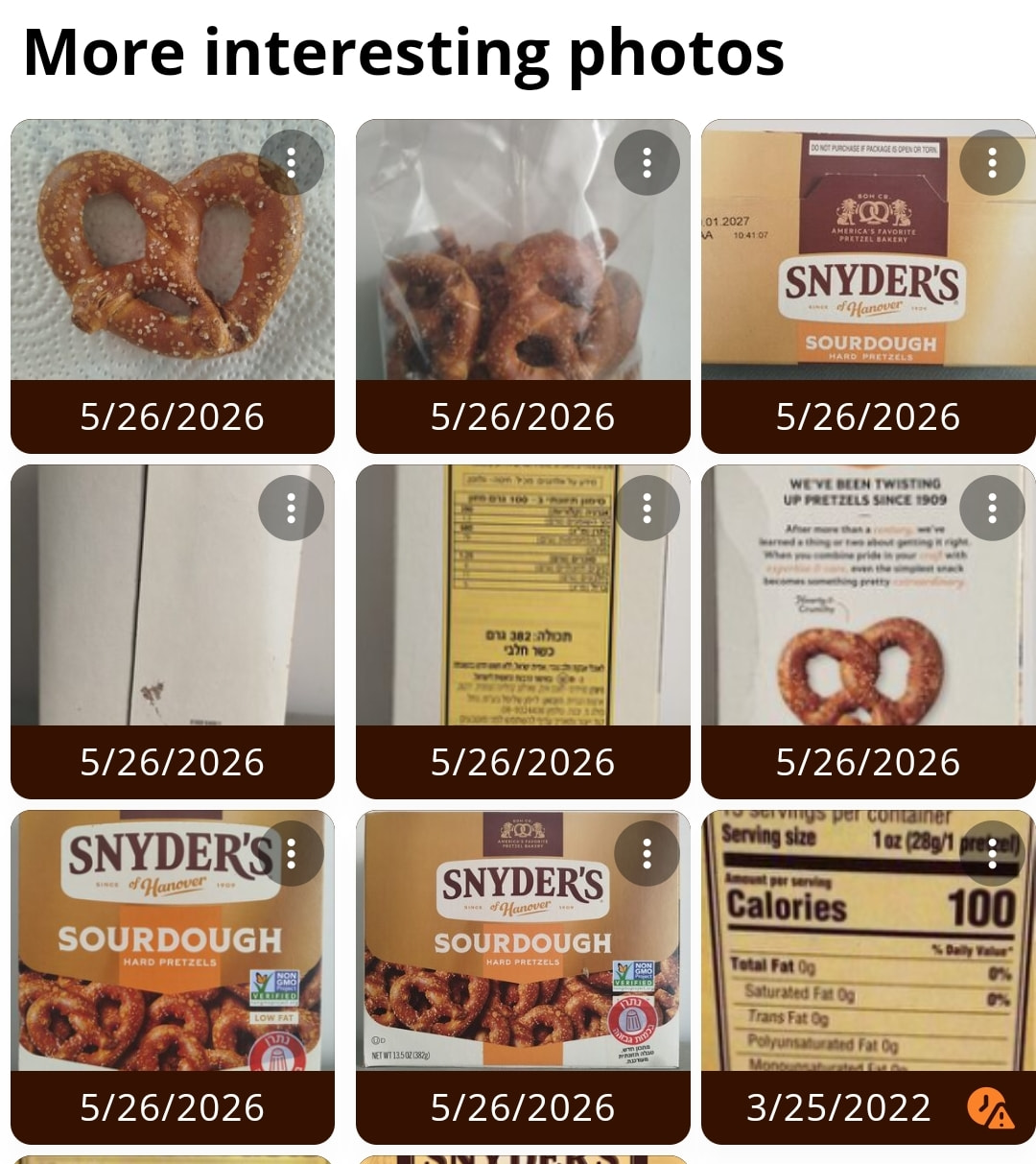
For food products I typically take one photo for each side of the packaging. I usually don’t take photos of the actual product itself. So for cereals I don’t take the bag out of the box to take photos of the cereals themselves. That’s partly because the packaging typically has a photo of the product itself already.
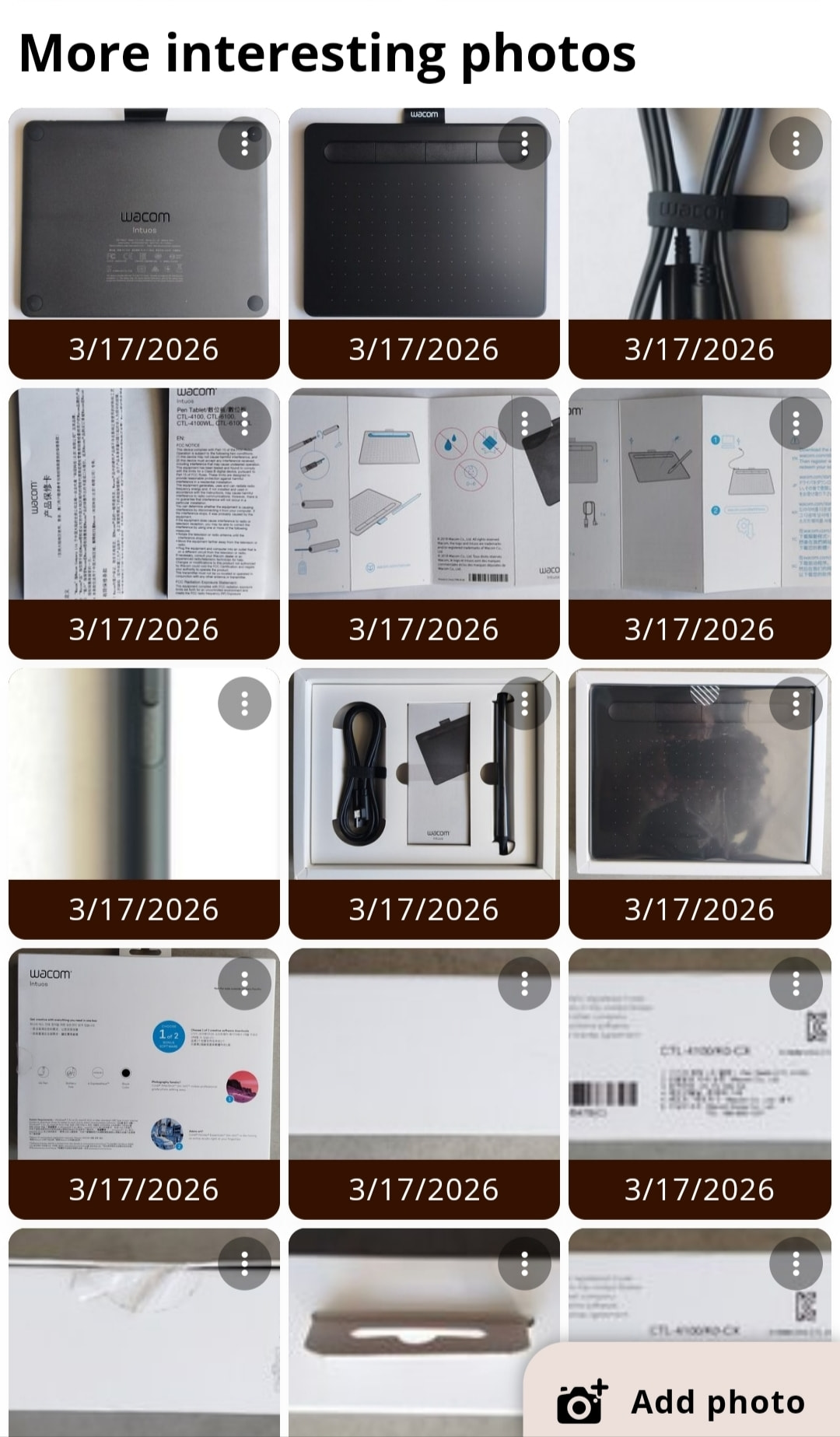
For non food products I think taking one photo for each side of the packaging would still make sense. I feel like taking an additional photo to document the content of the product (device, included cables, chargers, etc) would make sense. I’m not sure taking detailed photos of each included part would make sense but then I don’t know if this has been discussed before.
The idea of Open Food Facts is really to document the food products offering. So personally I tend to take any photo from the packaging because it contains all the “claims” from the producer. I don’t take photo of the product inside the packaging , but that might also be a good idea.
Our database may be used in unexpected way, for example a researcher might want to study the marketing of food products… or some detail we don’t take attention yet in the database but that they may retrieve thanks to those additional photos.
Of course we also have a limited amount of space on our servers, so it is important to keep taking photo with real “information”.
My logic is producers usually try to show the product in best possible conditions, so it can be helpful to see it in real world as is
This is what I’m trying to understand here, in this topic. The problem is it is not defined what real/useful information is and should be captured and what is not. If random user thinks it will be a great idea to take tons of almost same photos with only a little different in edge/perspective, for instance, should it be punished or forbidden? Because theoretically, this user can explain for themself and be sure it is useful, because all these photos will give better and most correct understanding of product packaging form or something similar. So if it is critically important for OFF to about not wasting too much server storage, the guidelines should be clearer
I sometimes take photos of the contents of the packet too, particularly if they’re in any way surprising, differ from the picture on the packet, or are packaged in a particularly environmentally unfriendly way. In other words, whenever it provides additional information that you can’t see or guess from the outside.
The argument that storage space is scarce and expensive isn’t wrong. However, Openfoodfacts completely undermines its own credibility on this issue because it does nothing – absolutely nothing – about shit accounts that regularly post 100 per cent useless rubbish or repeatedly and deliberately re-upload old photos.
A website that has no effective quality control clearly has no real problem with expensive storage space. 
Open Food Facts is a collaborative project, a lot of it evolves over time, and over the year we have been adding new types of data that allow new types of uses (e.g. packaging data is much more detailed than before, and it allows more precise estimates for environmental impacts).
“More interesting photos” is clearly in this area where we don’t have strict guidelines, because we don’t want to constrain those interesting photos. Especially for non food products : there are tons of different products, and so the interesting photos could be of many different things.
So: if you think adding a photo of something has value, please add it. If you think an already uploaded photo does not have any value, well maybe it does for other people. For instance, even if a product has not changed, having regular photos of ingredients or nutrition facts let us know that indeed, the product has not changed.
The argument of disk space is just to point out that photos do have a cost, and to use common sense when adding them. “tons” of photos taken at the same time of the same product with slightly different angles is probably not that useful indeed.
There are lots of things that could be improved, certainly. There are 1603 open issues (bugs or feature requests) on our backend alone: Issues · openfoodfacts/openfoodfacts-server · GitHub
We do what we can. 2684 issues have been resolved. Even when problems seem obvious, fixing them might not be that obvious or easy. A lot of the software development is done by volunteers, and they already do a lot quite frankly.